
Events,Workshops & Sessions
A National Conversation
Food systems are lived every day through relationships with land and water, the work of producing and harvesting food, and the ways people nourish their families and communities.
Since September 2025, the Indigenous Agriculture & Food Systems (IAFS) project has travelled across Canada to listen and learn. Through workshops, interviews, virtual sessions, and a national survey, First Nations, Inuit, and Métis participants shared what is working, where barriers remain, and what is needed for Indigenous agriculture and food systems to grow in ways that reflect community priorities and values.
Producers, harvesters, entrepreneurs, community leaders, Elders, Knowledge Keepers, youth, government representatives, and industry partners brought different experiences to the conversation. While every region carries its own realities, the conversations revealed shared priorities and challenges related to land access and management, food security and food sovereignty, economic and market opportunities, and access to capital.
What participants shared will help inform future actions, partnerships, and approaches that support Farm Credit Canada’s broader commitment to reconciliation across agriculture.
What We Heard
-
Land Access and Management
Participants discussed access to land and resources, decision-making, stewardship, and the relationships with land and water that sustain food, culture, communities, and economies. -
Food Security and Food Sovereignty
Conversations explored access to healthy and culturally meaningful foods and the role of harvesting, hunting, fishing, gathering, growing, and sharing food across generations. -
Economic & Market Opportunities
Participants identified opportunities for Indigenous producers, businesses, and communities, along with the infrastructure, market access, processing capacity, partnerships, and supports needed for community-led initiatives to grow. -
Capital Solutions
Participants shared their experiences with existing financing systems and the need for approaches that better reflect Indigenous realities, ownership structures, priorities, and paths to growth.

The Engagement Journey
The national engagement reached across regions, communities, and diverse Indigenous agriculture and food systems. Workshops were held from coast to coast and into the North, creating opportunities to hear from participants in urban, rural, northern, and remote locations.
In-person gatherings were complemented by virtual sessions, individual interviews, and an online survey. Together, these conversations brought forward distinct regional realities and community experiences while building a broader understanding of the shared priorities and challenges shaping Indigenous agriculture and food systems across Canada.Engagement at a Glance
Total participants in workshops, interviews, and the online survey: 617
In-person workshops held: 21
Virtual sessions held: 4
In-person and virtual interviews conducted: 79
Online survey participants: 106- Moncton, New Brunswick
- Trois-Rivières and Montréal, Québec
- Guelph, Six Nations of the Grand River, and Thunder Bay, Ontario
- Winnipeg, Manitoba
- Yorkton, North Battleford, Regina, and Saskatoon, Saskatchewan
- Blood Tribe, Calgary, Cold Lake, Edmonton, and Grande Prairie, Alberta
- Abbotsford, Kelowna, and Fort St. John, British Columbia
- Yellowknife, Northwest Territories
Regional Representation in Virtual Sessions
- Nunavut
- Labrador
- Québec
- Nova Scotia
- Ontario
- Saskatchewan
- Yukon
- British Columbia


On the Ground

The engagement was shaped not only by what people shared, but by the experience of gathering. Communities meaningfully engaged with the project team, and workshops created opportunities for people across roles, generations, and areas of experience to listen, learn, and contribute their knowledge.
The moments captured below offer a glimpse into the conversations and activities that took place across the country.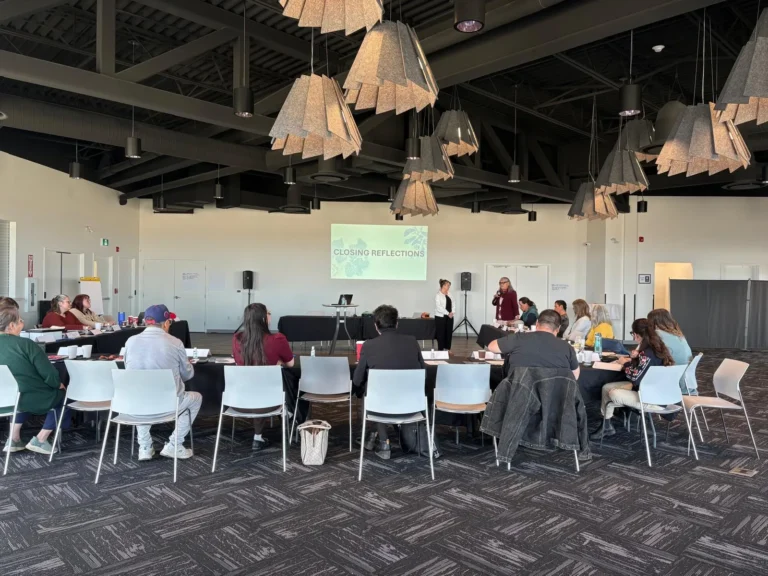
Participants share closing reflections at the North Battleford workshop.
North Battleford Workshop
“What stayed with us was the strength of the ideas people brought forward. Participants spoke about the planning, capacity, market access, and long-term support needed to turn community priorities into sustainable action.”
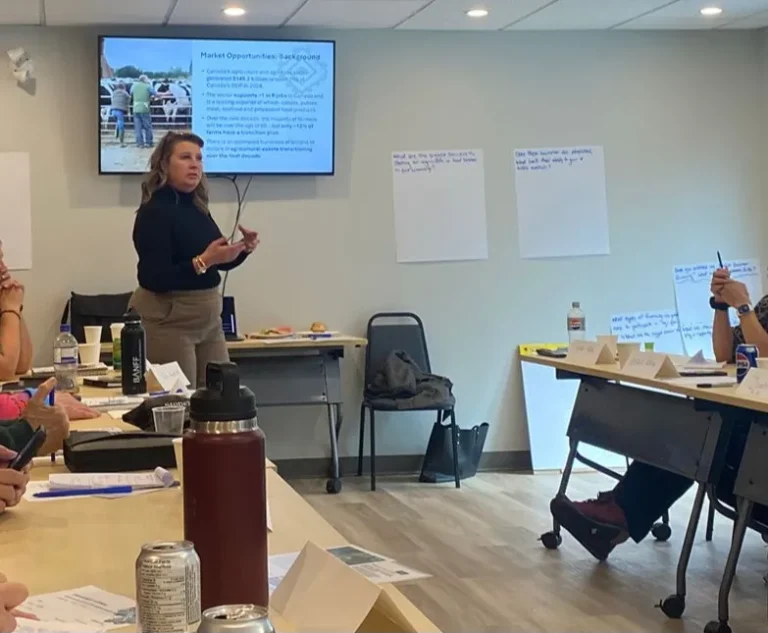
Mokwateh Senior Manager Miya Inkster guides participants through a market opportunities activity in Calgary.
Calgary Workshop
“Exploring market opportunities raised important questions about who leads, who benefits, and how growth can reflect what communities want in their future. Meaningful opportunities begin with the people they are intended to support.”
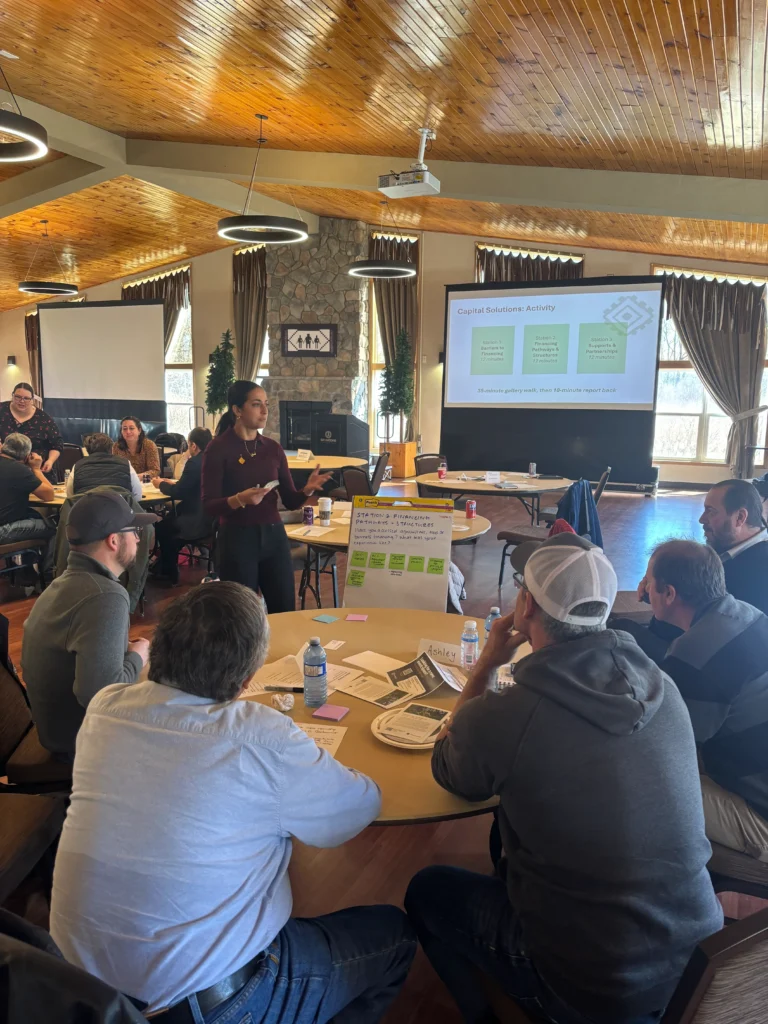
Mokwateh Senior Consultant Emaan Ali facilitates a small-group activity exploring capital solutions in Six Nations of the Grand River.
Six Nations of the Grand River Workshop
“Participants encouraged us to look at capital more broadly. Skills, relationships, knowledge, and collective effort all contributed to how communities create opportunities that move their priorities forward.”
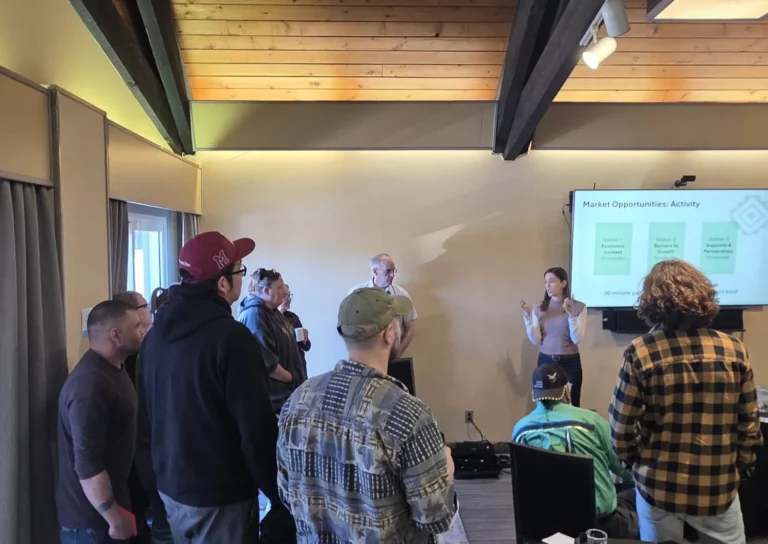
Mokwateh Director Katarina Savic facilitates a market opportunities activity during the Thunder Bay workshop.
Thunder Bay Workshop
“What we heard in Thunder Bay reflected the many ways people experience and participate in Indigenous agriculture and food systems. Land, water, harvesting, hunting, fishing, gathering, and traditional foods are deeply connected to community well-being, culture, and ways of life.”
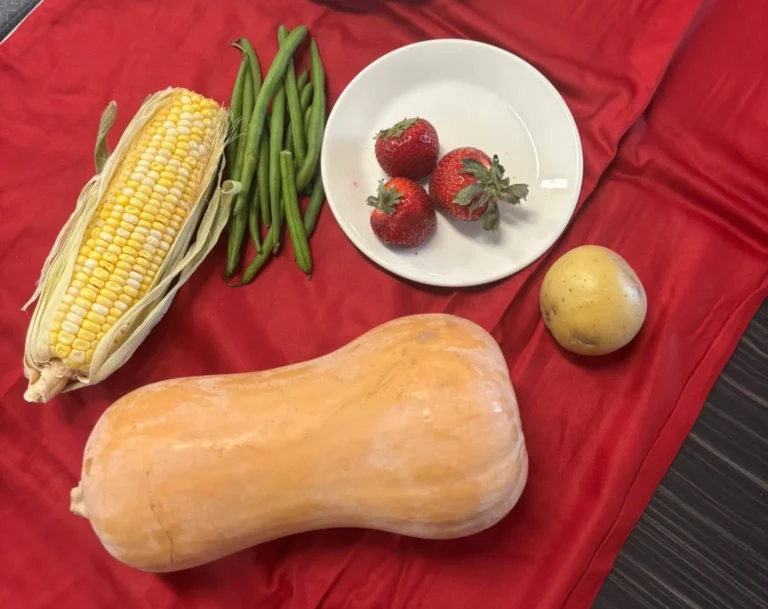
An Elder’s offering during the Trois-Rivières workshop.
Trois-Rivières Workshop
“This offering was a powerful reminder of the relationships, responsibilities, and knowledge that continue to guide Indigenous food systems across generations. It also carried a lesson about reciprocity: giving thanks for what we receive and recognizing our responsibility to care for the land in return.”
Beyond the Numbers
“The numbers show the reach of the engagement, but they cannot capture the honesty of what people shared, the depth of the knowledge they brought forward, or the care they brought to conversations about land, food, culture, and community. Behind every number is a person offering lived experience and a perspective on what is working, what could be strengthened, and what they hope to see grow.” – Mokwateh Facilitator
We are grateful to the communities, organizations, and businesses who joined the conversation. While the sessions and workshops are now complete, your knowledge, experiences, and voices remain at the heart of this work and will help shape what comes next.